




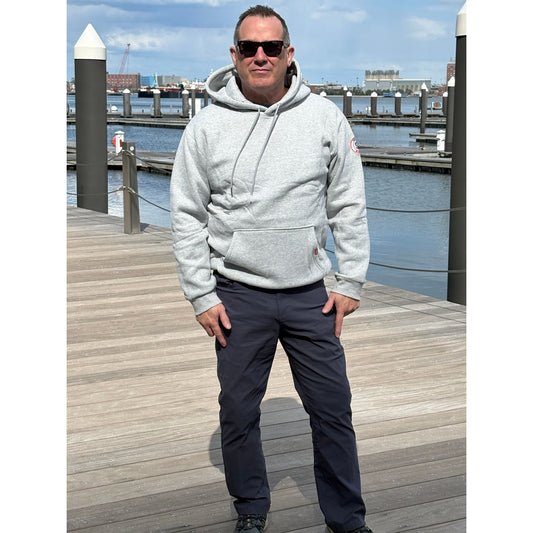


A whale watch looks like a summer trip. And it is — but the open ocean doesn't behave like summer once you're past the harbor mouth. The moment the boat clears the breakwater and the coastline starts to shrink behind you, the wind off the Atlantic hits differently. What felt like a warm morning on the Seaport waterfront can feel 20 degrees cooler on the bow of a moving vessel three miles offshore.
The people who enjoy whale watches most are the ones who came prepared. The ones who don't are the ones huddled near the cabin door, watching the action through a porthole. Boston Harbor already runs colder than the forecast — offshore, that gap widens considerably.
Why a Whale Watch Is Colder Than You Expect
Harbor cruises take you a few miles. Whale watches take you 25 to 30 miles offshore, into Stellwagen Bank — open Atlantic, no land break, no shelter. At cruising speed into an ocean breeze, apparent wind can exceed 25 knots. That's enough to strip heat from a lightweight layer in minutes. The sun is bright, the glare off the water is intense, and the temperature is still dropping. It's a combination that catches people off guard every time.
The solution isn't to overdress at the dock. It's to bring the right layers and use them when the conditions change — which they will, usually within the first 20 minutes of departure.
The Core Whale Watch Kit
Base layer: Heavyweight tee. A standard cotton tee won't cut it offshore. You want a heavyweight short-sleeve as your base — something with enough body to hold warmth when the wind picks up and enough structure to layer over cleanly. Thin tees flatten and cling in ocean wind. A heavyweight tee stays put.
Mid layer: Heavyweight pullover hoodie. This is the piece that makes or breaks a whale watch. A zip hoodie works for a harbor cruise — the trip is shorter, the conditions are more moderate, and you can manage temperature easily. Offshore, you want a pullover. More coverage, more warmth, no gap at the zipper when the wind is sustained. The zip hoodie is the right call for a harbor cruise — the pullover is the right call for open water.
Head: Structured cap or beanie. The sun off the Atlantic is relentless, and a cap handles the glare. On the return trip, when the wind has been at you for three hours and the temperature has dropped, a beanie is the piece you'll be glad you packed. Both fit in a bag. Bring both.

What to Wear: By Departure Time
Morning departure (most common): The air is cooler at the dock and the ocean will be colder still. Start with a heavyweight tee, pull the hoodie on before you board, and keep the cap on for the full trip. The sun will warm things up mid-trip, but the wind won't let you feel it.
Afternoon departure: Warmer at the dock, but the return trip is in the late afternoon when the temperature is already dropping. The hoodie goes in the bag at departure and comes out within the first 30 minutes. Don't leave it behind because it felt warm when you left the pier.
Fall whale watch (September–October): Stellwagen Bank in October is a different environment entirely. Long sleeve tee, heavyweight pullover, beanie from the start. Late-season time on the water demands more than a standard hoodie — offshore in fall, the pullover is the minimum, not the maximum.
The Glare Problem
Three hours on open water with sun reflecting off the Atlantic is a different experience than an afternoon on the Seaport waterfront. A structured cap with a stiff brim handles the glare and keeps the sun off your face for the full trip. It's the most practical piece on the boat — and the one most people forget to bring.
Gear Up Before You Board
Seaport Brand is at Boston Fish Pier — a short walk from the New England Aquarium and the whale watch terminals at Long Wharf. If you're heading out and realize you need a layer, stop in before you board. Find us here.
More from the Harbor
Shop Whale Watch Essentials
- Light Blue Heavyweight Pullover Hoodie
- Navy Blue Heavyweight Pullover Hoodie
- Heather Gray Heavyweight Pullover Hoodie
- Seafoam Green Heavyweight Pullover Hoodie