




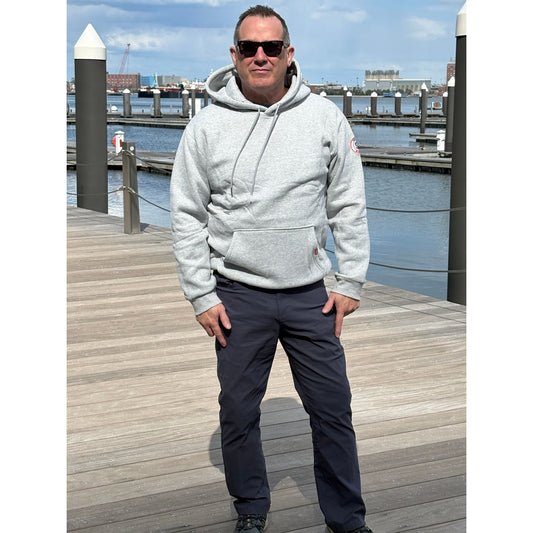


You check the weather before heading down to the Harborwalk. Sixty-eight degrees, partly cloudy, light breeze. You leave the hoodie at home.
Twenty minutes later, you're standing at the water's edge wishing you hadn't.
It happens to everyone who spends time near Boston Harbor. The forecast is technically accurate — but it doesn't tell the whole story. The harbor has its own microclimate, and once you understand why, you'll never leave the house underprepared again.
The Water Is Colder Than the Air
Boston Harbor's water temperature runs significantly colder than the ambient air temperature for most of the year. In early summer, the harbor surface can sit in the low 60s even when air temperatures push into the upper 70s. That cold water chills the air directly above it — and that's the air you're standing in when you're on a pier, a ferry deck, or the Harborwalk.
The further you are from the water, the less you feel it. But get within a few hundred feet of the shoreline and the temperature drop is real and immediate.
Wind Chill Is Doing More Work Than You Think
The National Weather Service forecast reflects air temperature in the shade, measured at a standard height, away from large bodies of water. It does not account for the harbor effect — the way open water accelerates wind across its surface and drives that wind directly into anyone standing at the edge.
Even a 10 mph breeze coming off the harbor can drop the feels-like temperature by 8 to 10 degrees. On a day the forecast calls for 65°F with a light wind, the effective temperature on a pier or ferry deck can easily be in the mid-50s. That's a significant gap — enough to go from comfortable to cold in the time it takes to walk from the parking garage to the water.
The Harbor Amplifies Morning and Evening Chill
Midday temperatures near the harbor can feel reasonable. But the harbor holds cold longer than the surrounding city. In the morning, before the sun has had time to warm the water surface, the air above the harbor is noticeably colder than what the forecast shows for the city as a whole. The same thing happens in the evening — as temperatures drop after sunset, the harbor accelerates that cooling. What felt fine at 6 PM can feel genuinely cold by 8 PM.
This is why people who spend real time on the harbor — fishermen, ferry commuters, sailors, anyone who works the waterfront — develop a habit of always having a layer nearby. Not because they're being cautious. Because they've learned.
Fog Makes It Worse
Boston Harbor fog is a specific phenomenon. Warm, humid air moves over the cold harbor surface and condenses. The result is a damp, penetrating chill that feels colder than dry air at the same temperature. Fog doesn't just reduce visibility — it gets into your clothing and makes whatever you're wearing feel inadequate.
A lightweight jacket that would be fine on a clear 60-degree day becomes insufficient in harbor fog. The moisture content changes everything. Harbor cities teach you to dress for conditions, not just temperature — and fog is one of the conditions the forecast almost never warns you about.
The Forecast Is Measured Inland
Weather stations used for official forecasts are typically located away from large bodies of water to avoid exactly the kind of microclimate distortion the harbor creates. That means the 68°F reading you see on your phone is accurate — for somewhere that isn't the waterfront. The harbor runs its own numbers.
Experienced harbor regulars know to subtract 8 to 12 degrees from the forecast when planning time near the water, especially in the morning, evening, or any time there's wind. Waterfront weather creates a different standard for what you wear — and that standard is almost always heavier than what the app suggests.
What This Means for What You Wear
The harbor doesn't care what the forecast says. It runs colder, windier, and damper than the city around it — and it does so consistently enough that the case for heavyweight layers near the water holds year-round. A hoodie that feels like overkill when you leave the house is exactly right by the time you reach the pier.
The people who are always comfortable near Boston Harbor aren't lucky. They've just stopped trusting the forecast and started dressing for the water.

Keep Reading